 Contribute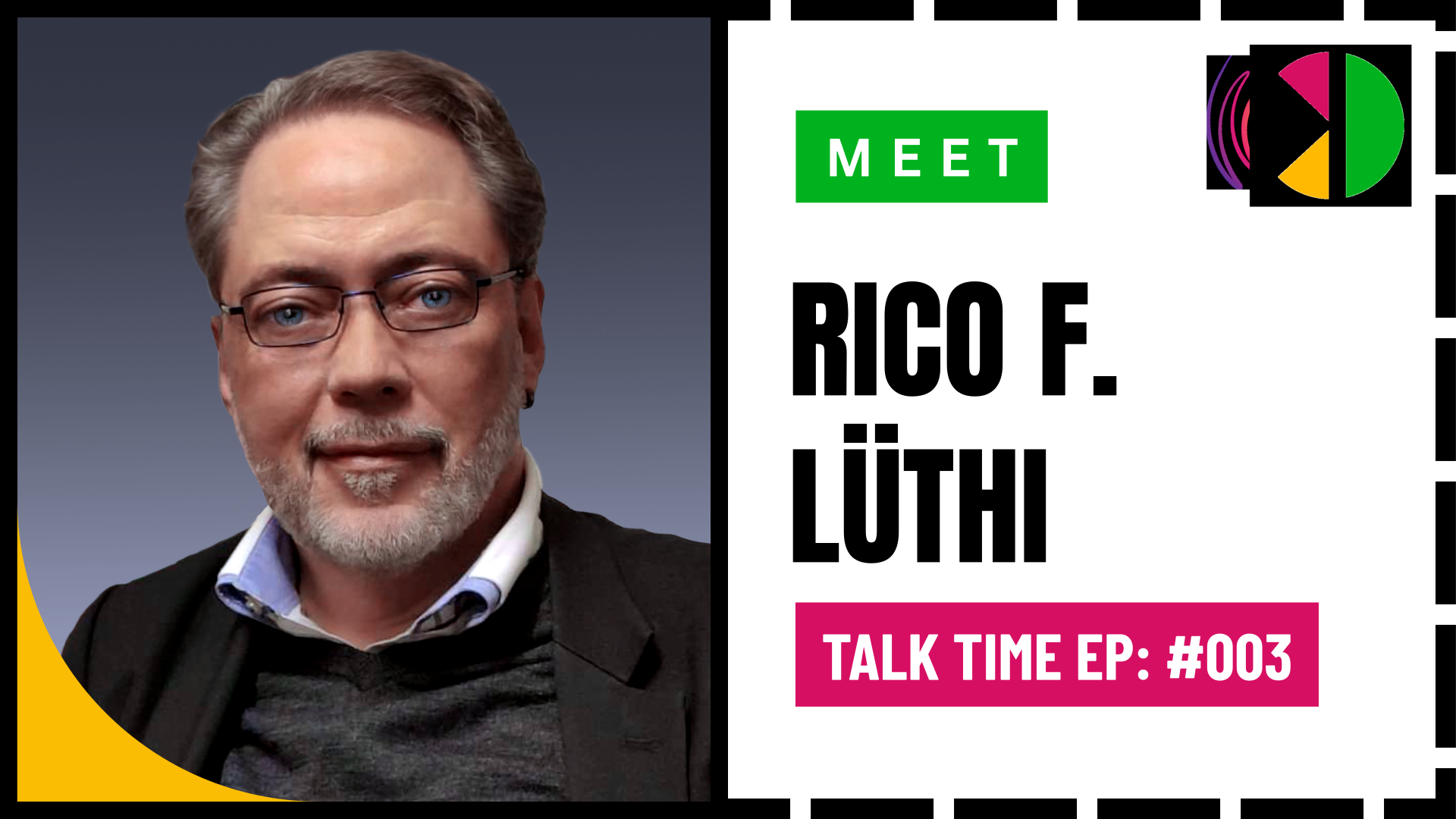
5,591 words, 30 minutes read time.
Editor’s Note
In our third Talk Time episode, Rico brings perspective.
In our first episode, Talk Time introduced the idea that behind every WordPress contribution is a real person with stories, memories, food, family, and experiences that shaped their journey. In our third episode, Rico F. Lüthi brings a thoughtful perspective on contribution, community, open source, and the future of WordPress.
🇵🇰 Roman Urdu Version
Rico F. Lüthi ka Talk Time interview ab Roman Urdu mein bhi parhein.
👋 INTRODUCTION & BACKGROUND
Let’s start by getting to know you. This section covers your background, current work, interests, and the experiences that have shaped your journey.
| Please introduce yourself. |
| Rico F. Lüthi, born in 1964, business informatics specialist, lecturer, and knot-tier. I connect people, knowledge, and technology, both professionally and as a volunteer. Patience is not one of my core competencies, which is why I prefer to put ideas into practice right away instead of talking about them. |
| What’s your hometown, and where do you currently live? |
| I was born in Chur, in the southeast of Switzerland. Life then took me to many countries, including six years in Southeast Asia. Today I live in Switzerland again. |
| What do you do professionally? |
| I’m a self-employed lecturer in adult education: project management, programming, and media and web production. Well over 2,000 lessons in 25 years. On the side, I produce podcasts, audiobooks, videos, and teaching materials. In short: I explain things until someone understands them, usually including myself. |
| What is your educational background? |
| Business informatics specialist. The rest is 40 years of hands-on experience, from salesperson to branch manager to executive management to independent consultant. I’ve seen the hierarchy from below and from above. |
| What are you working on these days? |
| I’m trying to understand AI and use it in a way that actually adds value or makes me more efficient. So far, I’ve only succeeded to a very modest degree. In my work as a lecturer, I’m trying to optimize teaching materials and create good examples and demos, so the materials become easier to understand and easier to follow through concrete examples. In the Training Team, I’m working to minimize administrative processes, and I support building up the Training Team’s regional groups. I’m also part of the organizing team of WordCamp Switzerland, which takes place in 5-6 March 2027. |
| What achievement are you most proud of? |
| Always whatever I’ve just finished. Which, unfortunately, happens far too rarely. |
| What hobbies do you enjoy outside WordPress? |
| Media production, especially audio and video. Knowledge management, and trying to understand foreign cultures. |
| What motivates you in life? |
| I’m an information junkie and I’m interested in everything and everyone. I also love bringing order into chaos, without abolishing the chaos entirely. Too much order means standstill. |
| What is something the WordPress community doesn’t know about you? |
| There’s plenty, and that’s a good thing. Since I’d like to keep it that way, no further comment. |
| How would your friends describe you? |
| Direct, impatient, helpful. Someone who disagrees, even uninvited, and has little tolerance for yes-men. Not exactly the ideal qualification for an international open source community. |
🔍 DISCOVERING WORDPRESS
Every contributor has a beginning. Share how you first discovered WordPress, what attracted you to it, and how your journey started.
| How did you first discover WordPress? |
| Coming from front-end development, I discovered it very early. Originally, we developed our own CMS, but we had to admit that building a solid base system is not that easy and takes a lot of maintenance. So we quickly looked for a CMS we could build on. WordPress was the system that evolved the fastest while still offering a stable foundation, so we didn’t have to constantly adapt the programs we built on top of it. On top of that, in many projects we simply needed a system for quick internal project communication. One that everyone understood right away, so everyone could focus on the output, with minimal system maintenance. |
| What was your first WordPress project? |
| I honestly can’t remember exactly. Since I started podcasting early on, it was probably a podcast website. |
| What attracted you to WordPress? |
| In the beginning, simply a system that was easy and quick to deploy. Only later did I discover that the truly great thing about WordPress is the community. I’ve met so many wonderful people from the community all over the world. |
| Who helped you when you were getting started? |
| At the very beginning, nobody, really. But that was a good thing. I learned a lot through all the experimenting and all the mistakes. Of course, I quickly discovered the support forums. Their biggest problem hasn’t changed to this day: the real stress isn’t finding solutions, it’s thanking all 100 people who reply when you ask a question. |
| What was the biggest challenge in your early days? |
| Understanding that WordPress is an open source project. Where, if you don’t like something, you can’t just lay into someone about it. You simply change it yourself. |
| When did you realize WordPress would become part of your career? |
| When I realized that everything I do is directly or indirectly related to WordPress. |
| What was your first contribution to WordPress? |
| Years ago, I was cursing about a menu item that sat in the wrong place in the interface. I wrote an angry, detailed email to WordPress. Shortly afterwards, I got a reply saying my input was very good, and would I like to discuss it? After a few emails, Zoom calls, and code contributions, nine months later it was online exactly the way I wanted it. I was so proud I probably grew about 50 centimeters. After the switch to Full Site Editing, that menu item was sadly no longer needed and disappeared. |
| What skills did WordPress help you develop? |
| Facilitation across time zones, community diplomacy in the global Slack. And understanding that humor is an extremely complex thing that rarely works across cultures. |
| What advice would you give your younger self? |
| Join in earlier instead of just consuming. Don’t ask, just do. Even if you occasionally have to apologize afterwards. |
| What keeps you interested in WordPress today? |
| The people. The software is good, but replaceable. A worldwide community that voluntarily defends an open web is not. |
< /> CONTRIBUTION JOURNEY
Contributions are at the heart of the WordPress project. Tell us about your contribution, experiences, motivations, achievements, challenges, and lessons learned along the way.
| What does open source mean to you? |
| Digital independence. Tools that belong to everyone. The most important part is the obligation to give something back when you benefit. |
| How did you get involved in contributing? |
| Through my stubbornness: I kept thinking, surely this should work completely differently. Add to that my interest in understanding how learning works across cultures. What do we have in common, what differs? From there, the Training Team was only one step away. At some point I was in, and I never found my way out again. |
| Which contribution are you most proud of? |
| The work in the Training Team: helping people make their first contribution, as a mentor, guide, and administrator. |
| Which teams or projects have you contributed to? |
| The Make Training Team (mentor, guide, administrator), meetup organization in the DACH region, plus talks and organizing at WordCamps. |
| What motivates you to contribute? |
| Education should be free. Learn.WordPress.org is exactly that: free training for everyone, maintained by volunteers. |
| What have you gained from contributing? |
| Friends all over the world, or as people in the Training Team put it: “an international family”. Even if that sounds a little sentimental. |
| What challenges have you faced as a contributor? |
| Coordinating volunteer work across time zones is one. The other: governance decisions nobody can make sense of. When the community collects hundreds of signatures for a Sustainability Team and the answer is still no, you’re allowed to ask questions. |
| What contribution would you like to make in the future? |
| The question isn’t what I’d like to do, it’s what I can do. I have hundreds of ideas and I see thousands of needs. Sadly, my time and my knowledge don’t stretch that far. What burns most: that we don’t lose ourselves in administrative nonsense, and that we work with each other instead of everyone working alone. If I can still contribute something there, that would be deeply satisfying. |
| How has contribution changed your career? |
| Understanding how the whole thing works organizationally has given me a lot. Many of these workflows and processes are very useful in professional life too. I’ve borrowed a great deal and integrated it into my daily work. |
| Why should others contribute? |
| The better question is: why not? Where else can you dig into topics you don’t know, or never dared to touch? All of it hands-on, in one of the largest open source communities in the world. And one more thing: open source does not mean free of charge. Anyone who benefits from it has an obligation to contribute, even if it’s just listening to a meetup talk every few months. |
🗓️ COMMUNITY & EVENTS
The WordPress community is built by people. We’d love to hear about your experiences with meetups, WordCamps, community building, and the connections you’ve made.
| What does the WordPress community mean to you? |
| It’s a big, slightly chaotic family. Even in a family, you don’t agree on everything, and sometimes the sparks fly. But in the end, everyone sits down together and moves the whole thing one step forward. |
| What was your first WordCamp experience? |
| Stressful, because I thought I had to attend as many talks as possible. But I met so many interesting people I wanted to talk to that I barely saw a single talk. I’ve since learned: that’s normal at a WordCamp, and it’s exactly why I keep coming back. |
| What is your favorite WordCamp memory? |
| The welcome picnic at WordCamp Europe 2025 in Basel, which constant rain forced onto a restaurant terrace. Squeezed together at five long tables, conversations happened that never would have happened in good weather. The rain was community building. |
| Have you organized a meetup or WordCamp? |
| I’m active in the WordPress Online Meetup Germany and have co-organized hybrid meetups. I was a volunteer at WordCamp Europe in Basel, and I’m now helping organize WordCamp Switzerland, which has been postponed to 5-6 March 2027. |
| What makes a great community event? |
| Spaces where good conversations happen, not just talks. Sounds simple, but it’s anything but. |
| What is the biggest lesson you’ve learned from the community? |
| Improvisation beats planning. When the Wi-Fi failed at Contributor Day in Basel, mobile hotspots were up within minutes. Chaotic but solution-oriented: that’s open source. |
| Who in the community inspires you? |
| It’s not the big names you stumble over everywhere. It’s the many people who quietly maintain the issues, do the translations, and keep the whole thing running. They are the true heroes of this community. |
| What would you like to improve in the community? |
| Transparency in governance. And I don’t just mean the top leadership; the various teams need to communicate much better too. Top-down decisions that can’t be understood may even be right. But if I don’t know why they were made, I can’t stand behind them. That makes me endlessly angry. As a Swiss, I can’t and won’t stay silent in a case like that. |
| What advice do you have for new community members? |
| Don’t ask whether you’re good enough. We should be asking whether we’re good enough for you. |
| What keeps you involved? |
| I’ve asked myself that many times. The answer is simple: it’s fun. |
📈 WORK & PRODUCTIVITY
How do you approach your work and manage your day? This section explores your work habits, productivity, tools, and professional insights.
| What does a typical workday look like? |
| There is no typical workday. Teaching days, production days, community days, and admin days all look completely different. The only constant is that I log everything and try to document it for myself, in the hope of finding it again. |
| Where do you usually work from? |
| Mostly from my home office, and on the train. |
| Morning person or night owl? |
| Definitely a night owl. Which makes working with my Asian colleagues harder. |
| What helps you stay productive? |
| A very detailed filing and documentation system that constantly reminds me of everything I still wanted to do. Plus my aversion to admin work, which I keep trying to automate, which is usually more effort than just doing it. A vicious circle, really. |
| How do you handle stress? |
| Stress is terrible, because it kills all creativity. And work without creativity, any AI can do better than me. So I keep giving myself breaks to reflect and ask: what am I doing right now, and does it actually make sense? |
| How do you avoid burnout? |
| By staying away from everything that isn’t fun. |
| What tools can you not live without? |
| Obsidian. That’s where my memory lives, my calendar, and probably my personality too. |
| What does success mean to you today? |
| Seeing that I’ve helped someone think further. |
| What is the best career advice you received? |
| Enjoy what you do. |
| What work habit has helped you most? |
| Document everything, immediately, in the right place. Future Rico depends on the notes of Present Rico, and the two have a strained relationship. |
🤖 AI & THE FUTURE
Explore how AI is changing the way we work, learn, and contribute
| How has AI changed the way you work? |
| Fundamentally. I assume AI can only deliver average results, so my output should be better than that. Unfortunately, that’s often not the case. In teaching, it has been quite painful: I often grade assignments where I ask myself whether I’m assessing an AI or helping a person move forward. Exams have become very complex and time-consuming. Even though AI has taken a lot of planning and material creation off my hands, my overall workload in this area has increased considerably since AI arrived. That said, as an assistant, AI has become a tool I’ve grown fond of. It’s wonderful to discuss things with, and it keeps showing me aspects I would simply have overlooked. |
| What AI tool do you use most often today? |
| That keeps changing. Right now it’s Claude for the more demanding things. For administrative, privacy-sensitive, and simpler things, I use various local LLMs via Ollama. |
| What’s the most useful thing AI has helped you do? |
| Translation work. And getting my very poor spelling down to a tolerable level. |
| What excites you most about AI? |
| Not that much, actually. Except that I can finally ask questions on such a basic level that I’d be embarrassed to ask a human. |
| What concerns you most about AI? |
| The concentration among a few US providers. And that many people use AI to generate information from scratch and aren’t even willing to read it before publishing it. AI must never be more than an assistant. The law is: human in the loop. |
| How do you think AI will impact WordPress over the next five years? |
| AI will help create simple, standard websites faster and more easily. For things that are only online for a short time, like a kid’s birthday page or work that’s only published briefly. It will significantly raise the bar for designers and content creators. The standard is rising, and the run-of-the-mill stuff you see today will no longer be acceptable, because AI will do it better in minutes. I hope that problems with wrong configurations, plugins, themes, and so on can be fixed automatically, or that at least clear instructions can be generated on how to fix them. In education, I hope we’ll see individualized learning paths. People could describe what they’d like to build, and the AI would deliver instructions adapted to their level, including the necessary steps. So that they also learn how to solve it on their own, without AI, in the future. |
| Has AI changed the way you create content, code, or support customers? |
| Yes. When building a plugin, I first discuss extensively with the AI how it could be done and where the pitfalls are (security, privacy, and so on). Then I have it build a prototype, which I tinker with for a long time, without AI, until I’m happy. At the end, one more critical review of all aspects, but I only have it output a list, which I then go through myself to decide what to implement and how. I have to be honest about documentation: I’m usually too lazy for that, so I let the AI generate it. But it doesn’t go out until I’ve understood it myself. |
| What skill do you think will become more important in the AI era? |
| Using AI efficiently. Let’s be honest: in many cases, creating something with AI takes longer than doing it myself. Because the AI’s output sounds good but is simply poor in the details, I keep finding myself in the role of reviewer. I don’t know about others, but that’s just boring and uncreative. |
| If AI could completely automate one task for you, what would it be? |
| Administration. And questioning me critically, pointing out forgotten aspects and contradictions. |
| What advice would you give WordPress professionals adapting to AI? |
| Talk to each other more: how do you use this tool, and what have you learned? Question the output more. Not every skill that produces a lot is a good skill. Let’s work together on making this tool better. Even if much of it isn’t open source, the knowledge about it has to be. |
🚀 ENTREPRENEURSHIP & LEADERSHIP
Explore the ideas, risks, and lessons behind building products, businesses, teams, and communities.
| Have you ever started a business, product, or side project? |
| Several times: partner, managing director, board member, Head of Project Management, and since 2012 an independent consultant and lecturer. |
| What inspired you to build it? |
| Impatience. Being employed often means waiting until someone else decides. That’s not for me. |
| What’s the biggest lesson you’ve learned from entrepreneurship? |
| Responsibility. Being responsible for people means worrying twice as much about whether the salaries can be paid. And when something goes wrong, taking the heat and protecting your people. |
| What was your biggest business mistake, and what did it teach you? |
| Stay away from consultants. You have to make your mistakes yourself. Your own are usually smaller than the ones a consultant recommends. |
| What advice would you give someone launching their first WordPress product or business? |
| Just do it! Solve a problem you have yourself. |
| Do you prefer building products, managing teams, or creating communities? |
| Doesn’t that all belong together? One doesn’t work without the others. |
| What is a failure or setback that taught you an important lesson? |
| So many that I should write a book about them one day. |
| If you were starting from scratch, what would you do differently? |
| Everything and nothing. Everything, because I’d love to know what would have happened if I’d done things differently. Nothing, because nobody can jump over their own shadow, so it would all turn out the same anyway. |
| What opportunity in the WordPress ecosystem excites you most right now? |
| How do we manage to work in a more decentralized way while holding everything together so it remains one whole? |
| What’s one thing every entrepreneur should learn early? |
| An entrepreneur undertakes things. But they need to be clear that they are not the administrator. So stay true to yourself, hand over the administration, and do what you do best: starting something new. |
| Who are you mentoring or helping today? |
| New contributors in the Training Team’s Guide Program, plus learners in courses and study groups. Mentoring is teaching without a timetable. One of the most demanding things there is, and one of the most rewarding. |
🍽️ FOOD & DRINKS
Now for the fun part! Share your favorite foods, drinks, food memories, and the meals that bring you comfort, joy, or inspiration.
| What is your favorite food? |
| That’s difficult, because I love food. I don’t eat meat, but everything else I like far too much. |
| What is your favorite drink? |
| Chilled tea, in large quantities. |
| Tea or coffee? |
| Coffee in the morning, essential for survival. After that, cold tea. |
| What food reminds you of childhood? |
| Chocolate, which is terribly clichéd for a Swiss. My father worked in a chocolate factory, so we always had plenty of it at home. Which motivated my school friends to visit me. Which, as a kid, I naturally exploited. Even though I don’t actually like chocolate anymore. |
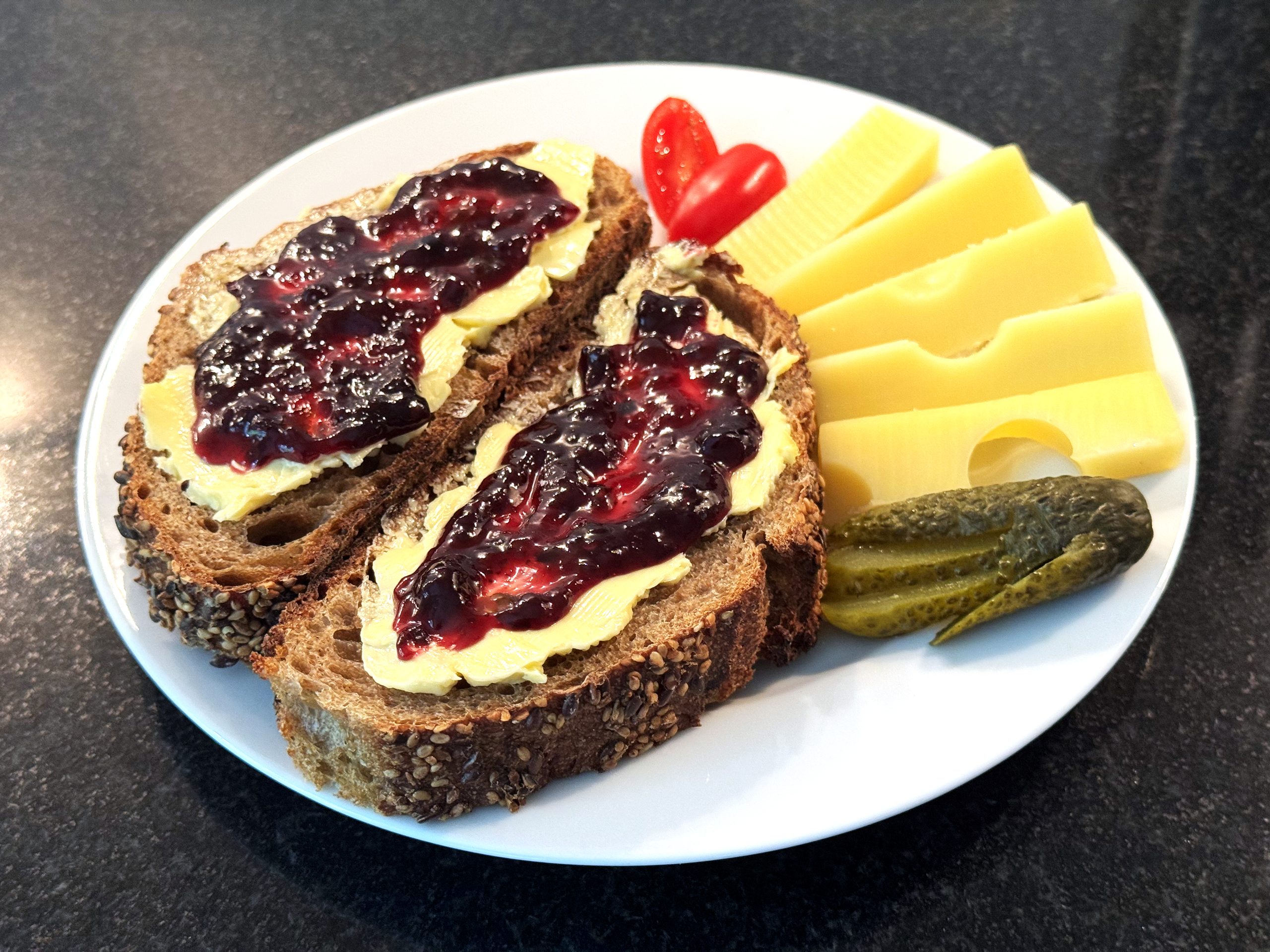
| What is your comfort food? |
| Bread with butter and jam, and a piece of cheese on the side. |
| What is your favorite breakfast? |
| Something savory and spicy (leftovers from dinner) with coffee. |
| What is the best meal you’ve ever had? |
| My grandmother’s stews. |
| What do you usually eat while working? |
| Nothing. Either I work or I eat. Never both at once. That would be an insult to the food. |
| What is your favorite snack? |
| Anything spicy. |
| What local dish should visitors try? |
| There are so many local dishes in Switzerland worth trying. But I can only recommend what all the kids eat: the bread with butter and jam I mentioned above, with cheese. Easy to get, and as strange as it may sound to many people, a real treat. |
🔥 COOKING & KITCHEN
Whether you’re an experienced cook or just enjoy experimenting in the kitchen, we’d love to learn about your cooking experiences, favorite dishes, and kitchen stories.
| Do you cook? |
| Yes, I even worked as a cook for three years. These days, far too rarely. |
| What was the first thing you learned to cook? |
| My parents sent me into the kitchen very early whenever I was hungry. I was allowed to try anything I wanted, as long as I cleaned up afterwards. That’s how I started: from fried eggs to plenty of inedible combinations of things I found in the kitchen. |
| What dish can you cook perfectly? |
| Leg of lamb, even though I don’t eat it myself. |
| Who taught you to cook? |
| My father was an excellent hobby cook. |
| What is your signature dish? |
| Making something delicious out of whatever needs using up. |
| What food would you like to learn to cook? |
| I worked as a cook for three years. What I never learned isn’t the craft, it’s the artistry. |
| What ingredient do you always keep at home? |
| The basics you always need: salt, pepper, sugar, oil, and so on. |
| If a team of WPKitchen visited your home, what would you serve? |
| As a lactose-intolerant Swiss, I would of course serve cheese fondue. It scales like WordPress and is the dish that lives up to the Swiss cliché. It needs little preparation, so I’d have time to get to know the team, and it’s a highly social affair. Plus any number of extensions, and you can debate the right configuration all evening. Anyone who doesn’t like cheese simply eats the potatoes, combined with all the other sides. A meal like that goes on for hours. Tea works too, of course, but absolutely no cola. |
| What is the most challenging dish you have ever cooked? |
| A bombe glacée for a friend’s birthday, for 80 people. |
| What meal would best represent your personality and why? |
| Raclette: it needs structure (the machine), lives off chaos (the sides), and nobody gets to stay passive. Everyone has to do something themselves, or there’s nothing to eat. |
🏡 FAMILY, HOME & TRADITIONS
Discover the people, traditions, and memories that helped shape your journey.
| What food instantly reminds you of home? |
| As mentioned: chocolate. |
| Who has had the biggest influence on your life outside of WordPress? |
| One of my teachers, who taught me how to build self-confidence. |
| How do you balance family life with your work and community involvement? |
| I’d claim I take enough time for everything. However, I know people in every area of my life who see that very differently. |
| What’s a lesson from a parent, partner, grandparent, or family member that still guides you today? |
| Enjoy life. Try to always see something good, even if that occasionally takes a very long time. |
| Who is the best cook in your family? |
| My partner, since my partner is a cook. |
| What meal brings your family together most often? |
| Spontaneous ideas, whenever we decide: we’re hungry, why don’t we cook something together? |
| What’s your favorite childhood food memory? |
| Strawberry cake for my birthday. |
| If you could share one meal with your entire family tonight, what would be on the table? |
| Let me look in the fridge and take whatever needs to be used up today. |
| What does “home” mean to you? |
| Where I can retreat, and where my suitcase and my computer are. |
😋 WORDPRESS & FOOD
Tell us about the meals, drinks, and food experiences connected to your WordPress journey.
| What do you usually drink while contributing? |
| Cold tea, with nothing added. |
| What food keeps you productive? |
| Leftover salad from the last meal. |
| What is your favorite WordCamp food memory? |
| The food at WordCamp Europe in Basel, where I just grabbed something from the buffet and sat down somewhere. I quickly got talking with people about the good food and the event. We’ve since met again in Poland and in Switzerland. That’s how a meal turned into a friendship. |
| What food would you serve at a global WordPress gathering? |
| Simply a huge buffet with as many dishes as possible. So there’s guaranteed to be something for everyone. |
| If you could have lunch with a contributor, who would it be? |
| With all of them. If it has to be one: with the person who translated the first lesson on Learn without anyone ever noticing. |
| What food reminds you of WordPress events? |
| Spicy Thai food. After more than ten years, I was back in Bangkok, this time for the WordCamp. People naturally assumed I was used to Western food and therefore had no idea what spicy means. They looked at me with friendly smiles, but also with pity, when I asked for the spicy version. They were all the more astonished when I found it actually wasn’t that spicy. |
| If the contribution had a flavor, what would it taste like? |
| Bittersweet. A lot of work, little applause, and yet you immediately want the next serving. |
😄 FUN & REFLECTION
A collection of lighthearted and thought-provoking questions designed to reveal more about your personality, perspectives, and interests beyond WordPress.
| Pineapple on pizza: yes or no? |
| Personally, I like pineapple on pizza, even though I know it insults the highly esteemed Italian food culture. Once, I even had to confirm this opinion via a checkbox while logging in. Those who were around back then know what I’m talking about. Since then, pineapple on pizza no longer tastes only sweet to me, but slightly bitter too: it reminds me of the many good people who have left the community since. |
| Sweet or savory? |
| Both as little as possible. Only as a seasoning these days. |
| What food do most people love but you don’t? |
| That seems to be meat. |
| What hidden talent do you have? |
| My talents aren’t hidden. The better question: which talents don’t I have, while doing it anyway? |
| What makes you laugh? |
| I laugh at myself a lot when I look back at my own work. And at people with dry humor who look at things in the most different and unexpected ways. |
| If you had a superpower, what would it be? |
| The power to get people to take themselves less seriously. |
| What is something on your bucket list? |
| I put ideas into practice right away instead of collecting them on lists. |
| What life lesson took you the longest to learn? |
| Having patience, and not taking life too seriously. |
| What are you grateful for today? |
| That I keep meeting new people who surprise me and who refuse to let their rough edges be polished off. |
| What food do you love that surprises people? |
| Cheese. I’m lactose intolerant, and my Asian family just shakes their heads. |
🧐 LOOKING AHEAD
As we conclude, we’d love to hear your thoughts on the future of WordPress, your personal goals, and the impact you’d like to make in the years ahead.
| What excites you about WordPress’s future? |
| That the most exciting answers are currently emerging in a decentralized way. That even after all the problems, the community still stands together, embraces the latest developments, and creates ways for truly everyone to publish their content on a free and open web. |
| What would you like to see improved in WordPress? |
| Governance. A project of this size needs decision-making processes people can follow, not just decisions. Transparency at every level. And administrative processes that don’t get in the way and are up to date. |
| What goals are you currently pursuing? |
| Making the Training Team a real team again, one that creates new learning experiences together. |
| What impact would you like to leave behind? |
| Motivating people to take part in an open source community instead of just consuming it or only extracting profit from it. |
| What advice would you give new contributors? |
| Shout! If you’re not being heard, it simply means you weren’t loud enough. Because we want exactly you on board. And don’t ask whether you may change or add something. Just do it! |
| What message would you share with the WordPress community? |
| The software is replaceable; you are not. Stay inconvenient, ask questions, and don’t let anyone talk you out of having a say. Let’s do more things together. Even if that takes much more time, the result is worth more in the long run. |
| What contribution opportunity would you encourage others to explore? |
| That’s not even a question: the Training Team. There is no team where you can benefit more personally or work in more varied ways. You can write, produce audio and video, code, build demo applications, and learn how people learn. Along the way, you get to know WordPress in its deepest depths. Working with all the Make teams, you get to know every aspect of the community. And if you’re thinking, “but I can’t do any of that”: then you’re exactly right for us. Who is better placed to judge whether a lesson is understandable than someone with no clue about the topic? And who will teach you everything you need to know, if not us? I honestly don’t understand why you’re not already on board. |
| If you could change one thing in the ecosystem, what would it be? |
| The concentration of power. It’s unworthy of an open source community. The leadership team is very good, and I have the greatest respect for what has been achieved and is still being achieved. But no single human being can lead an organization of this size. It has to rest in many hands. |
| If you could share one meal with the whole WordPress community, what would it be and why? |
| A giant picnic (because there’s something for everyone), where people keep mixing and enjoy the food together. Food is the only art form you can absorb, and in every culture, eating together is the foundation of social cohesion. |
| Is there anything you’d like readers to know that we didn’t ask? |
| Then they should simply ask. All contact details are in my profile. |
| How would you like to be remembered by the WordPress community? |
| I hope people won’t remember me. I hope my input has an impact, even if nobody knows where it came from. |
BEYOND THE QUESTIONS
Every Talk Time interview includes five personal elements that make it different from traditional interviews. These simple details help readers connect with the person behind the WordPress profile and add a uniquely WPKitchen touch to every story.
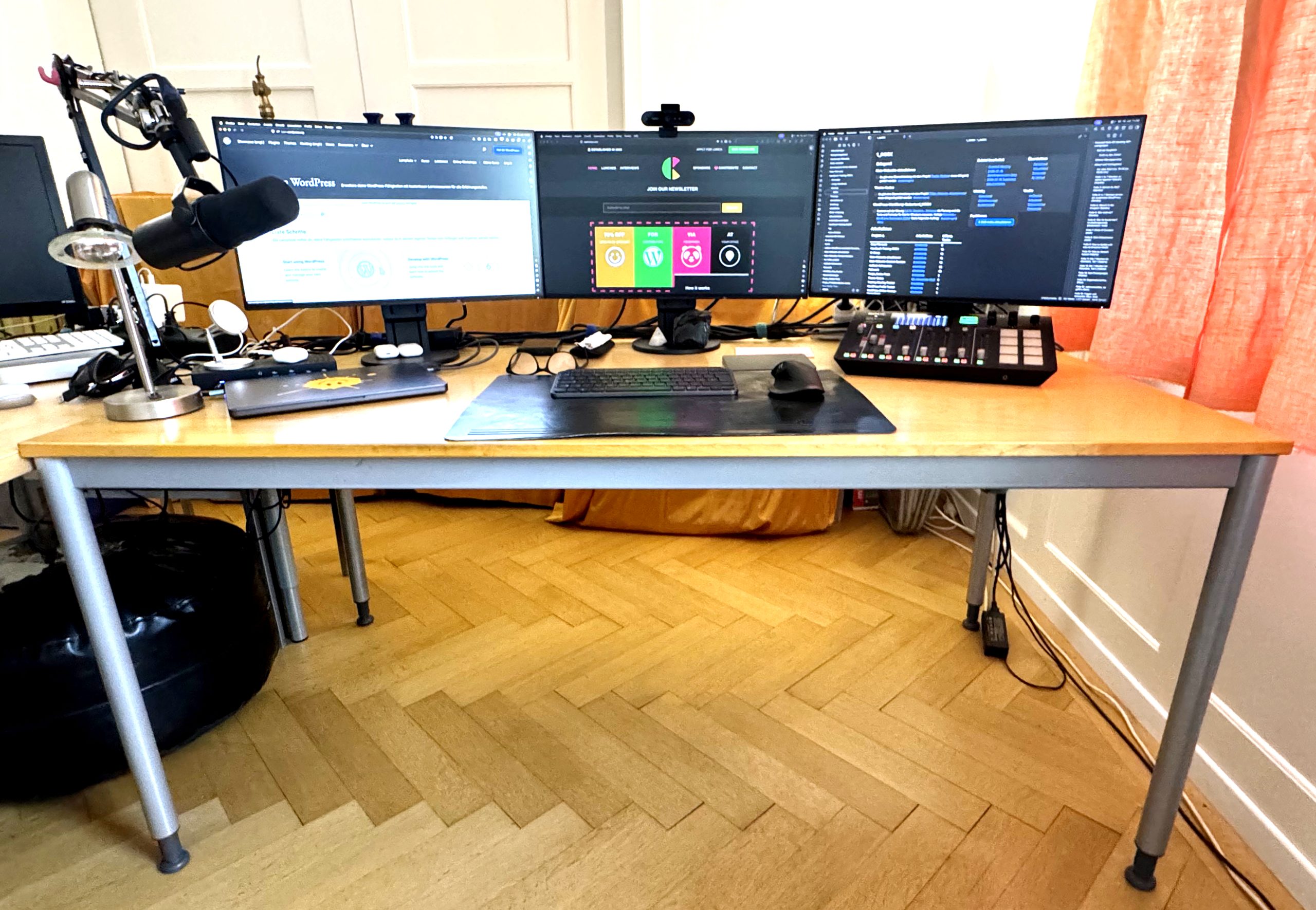
| 🖥️ Workspace: Share a photo of your workspace. |
| 💬 Favorite Quote: Share a quote that inspires you. |
| “The way to get started is to quit talking and begin doing.” (Walt Disney) That’s the principle I work by, usually without waiting for the first part. |
| 🔤 Urdu Localization Pick: If WPKitchen could help translate your own or another WordPress-related project, plugin, theme, or resource into Urdu, what would you choose and why? |
| The learning pathways on Learn.WordPress.org. Free, structured education only unfolds its full value in the learner’s own language. That’s as true for Urdu as it is for German. |
| 🏠 Kitchen Photo: Please share a photo of your kitchen or cooking space. Tell us a little about this space. |
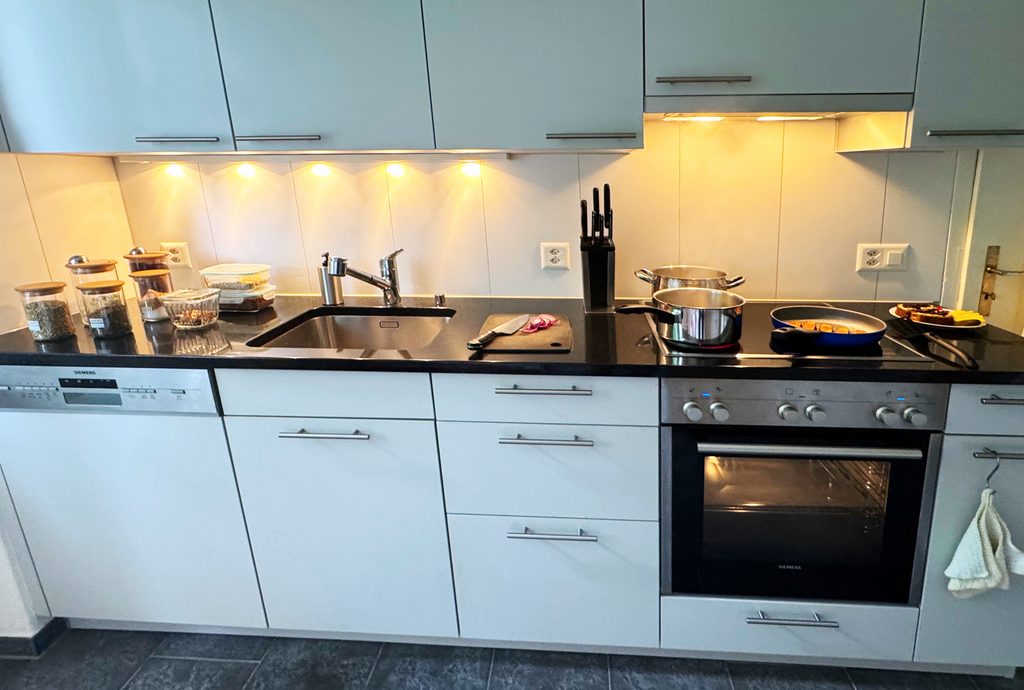
This is part of our kitchen, captured right in the middle of the action: something is simmering on the stove, the pan is sizzling, and a few onion rings on the cutting board are still waiting for their turn. So yes, this kitchen is actually used for cooking, not just for photos.
Full disclosure: it rarely looks quite this tidy in everyday life. But that’s exactly what we love about this space: it’s the heart of our home, where we chop, taste, and chat. And if you look closely, you’ll spot a slice of bread with jam and cheese on the right. That’s my insurance policy for when our youngest turns up his nose at my cooking once again.
A Message for WPKitchen
Everyone talks about contributing to WordPress. You feed the people who actually do it. That’s the most honest interpretation of Five for the Future I’ve seen so far. My wish for your future: treat WPKitchen like WordPress itself and publish the recipe as open source, so every local community around the world can cook it with its own ingredients. And should Talk Time ever come to Switzerland: the cheese fondue is on me. Just don’t bring cola.
Guestbook Autograph